The goal is to relieve hip pain and improve your mobility. Eassessment helps decide when to operate and prepare for recovery.
What You Can Win With Intervention
The goal is for the joint to stop conditioning your life so much: to reduce pain and facilitate daily activities. In the assessment your priorities and the degree of improvement that can be expected, together with the recovery that you will need, are concrete.
When does the operation come up?
The indication is based on symptoms, examination, and testing. It matters the difficulty of walking, resting, or performing daily activities, in addition to the response to previous treatments.
There is neither a single age nor a radiological degree that requires surgery alone. It may also be reasonable to wait and re-evaluate, if symptoms allow an acceptable quality of life to be maintained.
What Prosthesis Can Provide
The goal is to reduce pain from the joint and improve function. You cannot promise complete absence of pain, an exact date of recovery or return to any activity. Other back, muscle, or joint problems may influence the outcome.
What does ROSA robotics support?
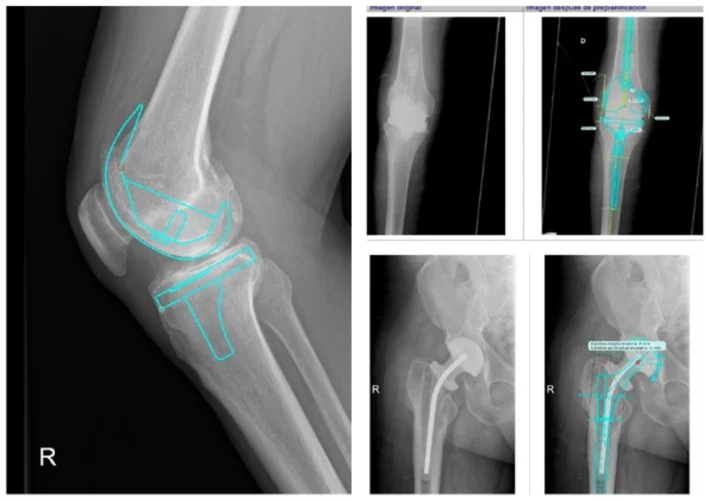
Robotic assistance can add planning and measurements during the intervention. ROSA, by Zimmer Biomet, has specific applications for hip and knee. Its usefulness and availability are valued for each procedure.
Learn about how ROSA works, what benefits are studied, and what are its limits?. Technology does not replace the need for an appropriate indication for joint replacement, or guarantee an individual outcome.
Risks to be discussed
Risks include infection, blood clots, dislocation, fracture, injury to nerves or blood vessels, and differences in leg length. Over time, wear or loosening may require another operation.
Individual risk depends on your history and the characteristics of the surgery. Informed consent should allow you to resolve doubts, not just sign a document.
Prepare the intervention
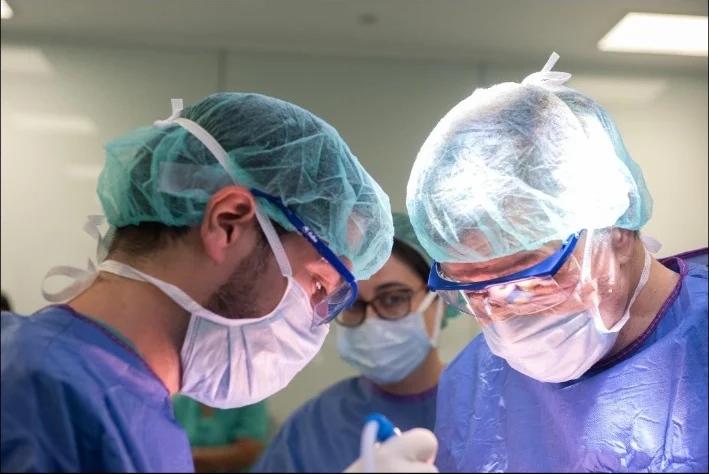
The team will review your medical history, medication, skin condition and possible sources of infection. Do not stop anticoagulants or other treatments on your own. Preparation also includes arranging support at home and removing obstacles that increase the risk of falls.
Recovery and return to daily life
Mobilization, walking aids and the progression of exercises are adapted to the intervention and your situation. Recovery continues for weeks and months; it is not summarized on the day of discharge.
Precautions when sitting, bending or sleeping depend on the approach and instructions of the equipment. Re-driving requires an assessment of leg control, medication and the ability to react safely.
Useful questions before deciding
- Why is prosthesis a reasonable option in my case and what alternatives remain?
- What approach and implant are proposed and why?
- How do my illnesses or medication change the risk of surgery?
- What help will I need at home and how will follow-up be?
- Who should I call if there's a problem?
After trading: when to ask for help
A fever with problems with the wound, discharge, pain that increases clearly, or significant swelling of a leg requires urgent medical contact. Shortness of breath or chest pain require emergency attention.
Do you want to assess if this option fits in with you?
We will review your symptoms, available tests, and treatments that you have tried to guide you on the next step.
Book an appointment at Clínica RotgerSources for further information
- AAOS OrthoInfo · Total hip prosthesisPatient information
- AAOS OrthoInfo · Joint replacementPatient information
- Zimmer Biomet Europe · ROSA Hip SystemManufacturer: application and technical functions
- Möller et al. · ROSA Knee versus conventional technique (initial publication 2025)Randomized trial, one center; one-year follow-up