The aim is to improve pain and daily activity. The plan combines the choice of the intervention with a recovery adapted to you.
What You Can Win With Intervention
The goal is for the joint to stop conditioning your life so much: to reduce pain and facilitate daily activities. In the assessment your priorities and the degree of improvement that can be expected, together with the recovery that you will need, are concrete.
When to evaluate a prosthesis
The pain, mobility, deformity, stability and activities that you cannot perform are taken into account. Your goals and general health are also important. It is not necessary to wait until you can't walk to ask for information.
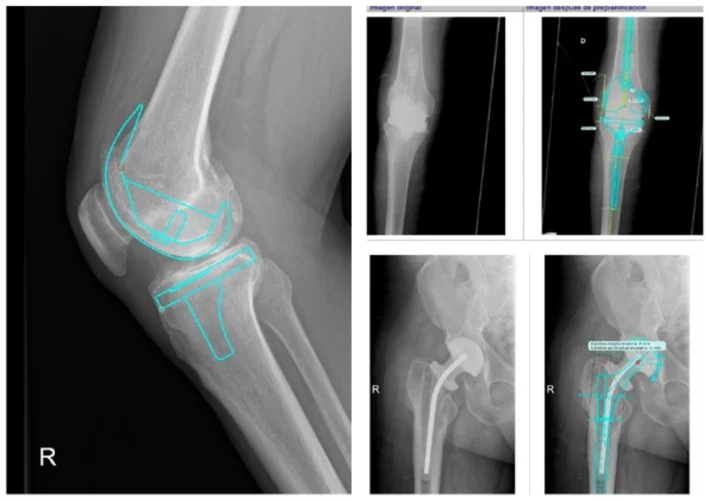
Total or partial prostheses
A total prosthesis addresses several surfaces of the joint. A partial prosthesis may be an option when the disease is limited to one area and certain criteria are met. The examination and images allow to study which alternative is appropriate.
The technique, the implant or the use of assistive technology alone do not guarantee a superior result for all people. It is useful to ask what specific benefit is expected in your case.
What does ROSA robotics support?
Robotic assistance can add planning and measurements during the intervention. ROSA, by Zimmer Biomet, has specific applications for hip and knee. Its usefulness and availability are valued for each procedure.
Learn about how ROSA works, what benefits are studied, and what are its limits?. Technology does not replace the need for an appropriate indication for joint replacement, or guarantee an individual outcome.
What is sought with the operation
The goal is to improve pain and ability for daily activities. An operated knee may still feel different. Some people maintain pain, stiffness, or difficulty kneeling; the prosthesis does not amount to recovering a new joint without limitations.
Relevant risks
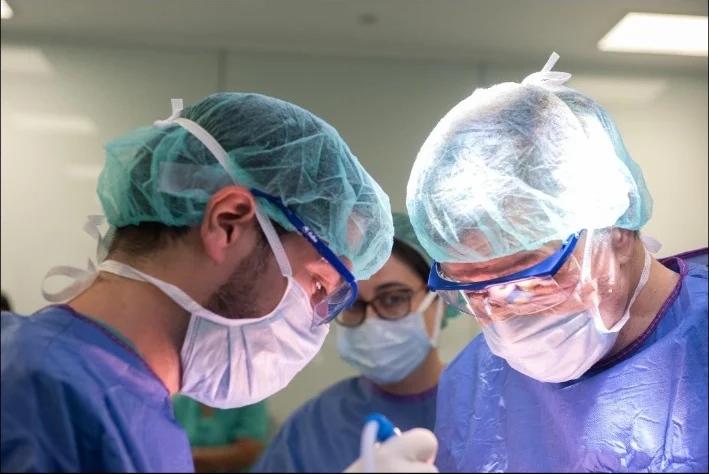
Infection, thrombosis, bleeding, injury to nearby structures, stiffness, instability and persistent pain should be explained. Over time, wear or loosening may require revision surgery.
The preoperative assessment is used to identify and, where possible, reduce modifiable risks. The balance sheet is made individually.
Recovery: an active process
Pain control, wound care, mobilization, and exercises have an important role to play. The pattern of support and rehabilitation should come from the team that treats you.
Recovering mobility and strength takes time. It is not appropriate to compare your evolution only with that of another person. The demands for returning to work vary greatly between a sedentary task and a physical activity.
Prepare the surgical consultation
- Describe the activities you have lost and the treatments already tested.
- He's got a list of medications, allergies, and previous operations.
- Ask for blood clot prevention, rehabilitation plan, and reviews.
- Clarify who will help you when you return home and how to consult an incidence.
Post-intervention warning signs
Urgently consult for wound secretion, fever associated with local changes, increased pain, or marked swelling of a leg. If shortness of breath or chest pain occurs, seek emergency attention.
Do you want to assess if this option fits in with you?
We will review your symptoms, available tests, and treatments that you have tried to guide you on the next step.
Book an appointment at Clínica RotgerSources for further information
- AAOS OrthoInfo · Total knee prosthesisPatient information
- AAOS OrthoInfo · Joint replacementPatient information
- Zimmer Biomet Europe · ROSA KneeManufacturer: technical operation; no independent evidence of clinical superiority
- Möller et al. · ROSA Knee versus conventional technique (initial publication 2025)Randomized trial, one center; one-year follow-up